Health Food 17/02/2026 23:17

The More Decisions You Make, The Harder Healthy Eating Can Become

By the end of a long day, even simple choices can feel strangely exhausting.

“What should we eat tonight?”
suddenly sounds like a complex question.

This experience is not random.

It reflects a psychological phenomenon known as decision fatigue — the gradual depletion of mental energy after repeated choices.

And it influences eating behavior more than most people realize.

Your Brain Is an Energy Manager

The human brain is constantly allocating resources.

Every decision — from replying to messages to solving problems — draws from the same cognitive reserve.
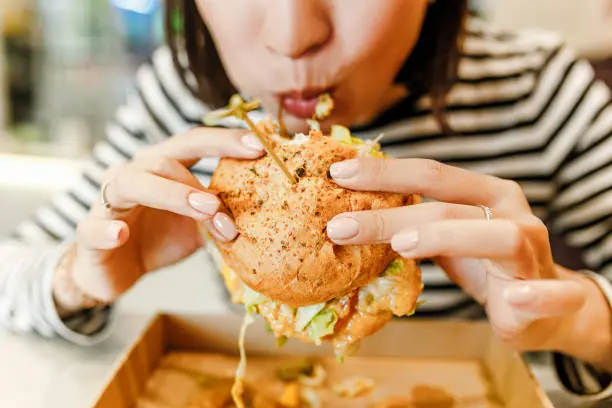
tôi mệt mỏi đến nỗi tôi thậm chí không thể ăn! - eating with tiredness hình ảnh sẵn có, bức ảnh & hình ảnh trả phí bản quyền một lần
As that reserve declines, the brain begins favoring options that require less effort.

Not worse options.

Just easier ones.

Convenience becomes more appealing than intention.

Why Food Choices Are Especially Vulnerable

Unlike many daily decisions, eating decisions occur multiple times per day.

Breakfast.
Lunch.
Snacks.
Dinner.

Add a busy schedule, and by evening, your brain may quietly shift toward what psychologists call the path of least resistance.

Often, that means foods that are:

familiar

immediately available

highly rewarding

This is not a failure of motivation.

It is efficiency at work.

A Familiar Evening Scenario

After a demanding day, imagine two possibilities:

Option A: cook a balanced meal.
Option B: order something quick.

Even individuals who genuinely value nutrition may choose the second — not because they stopped caring, but because their cognitive bandwidth is low.
người phụ nữ trẻ buồn ngủ uống cà phê, cảm thấy mệt mỏi, bị mất ngủ và rối loạn giấc ngủ, ngồi trong bếp - eating with tiredness hình ảnh sẵn có, bức ảnh & hình ảnh trả phí bản quyền một lần
When mental energy drops, long-term goals naturally compete with short-term relief.

Relief usually wins.

Reduce Decisions, Improve Outcomes

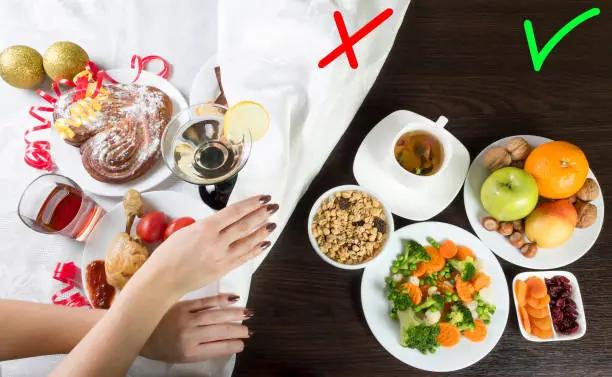
One of the most effective strategies for supporting healthier eating is surprisingly simple:

Make fewer decisions when you’re tired.

Not by forcing willpower — but by designing your environment earlier.

Consider:

👉 repeating a few reliable breakfasts
👉 keeping nutrient-dense staples visible
👉 planning meals loosely
👉 prepping ingredients ahead of busy days

Structure reduces friction.

And when friction drops, better choices often become automatic.

The Power of Defaults

Humans tend to follow default options.

If cut fruit is at eye level, it gets eaten.

If balanced leftovers are ready, they become dinner.

If the only immediate option is takeout, that often becomes the decision.

Environment frequently guides behavior more quietly — and more powerfully — than motivation.

Compassion Over Criticism

Understanding decision fatigue invites a more supportive perspective.
cô gái vị thành niên buồn bã và buồn bã ngồi ở bàn ăn ngũ cốc ăn sáng - eating with tiredness hình ảnh sẵn có, bức ảnh & hình ảnh trả phí bản quyền một lần
Instead of asking:

"Why didn’t I make the better choice?"

Try asking:

"How many decisions had I already made today?"

Often, the answer explains everything.

And explanation tends to dissolve self-blame.

The Bigger Perspective

Healthy eating is rarely about winning isolated moments of discipline.

It is about shaping conditions that make nourishing choices easier — especially when you are not at your sharpest.

Because the goal is not perfection during high-energy days…

…but resilience during demanding ones.

When fewer decisions stand between you and a balanced meal, consistency becomes far more attainable.

And consistency, more than intensity, is what supports long-term health.

News in the same category

News Post