Health Food 17/02/2026 23:14

“Natural Sugar” Is Still Sugar — But Context Changes Everything

Few nutrition topics create as much confusion as sugar.

On one side, you hear that sugar should be minimized.

On the other, foods like fruit and honey are often described as natural — even beneficial.

So which is it?

The answer lies in a word that rarely gets enough attention:

context.

Because your body does not respond to sugar in isolation.

It responds to the nutritional environment surrounding it.

Sugar Is a Molecule — Not a Moral Category
nhiều chất làm ngọt - stevia, đường, phấn hoa và mật ong - natural sugar hình ảnh sẵn có, bức ảnh & hình ảnh trả phí bản quyền một lần
Whether it comes from fruit, honey, or table sugar, the basic structure is similar.

But the delivery system can be dramatically different.

Think of it this way:

Sugar rarely travels alone in whole foods.

And that companionship matters metabolically.

Fruit vs. Fruit Juice: A Useful Illustration

Eating an orange involves:

fiber

water

chewing

slower absorption

Drinking orange juice removes much of that structure.

Absorption accelerates.
Satiety may decrease.
Portion size often increases effortlessly.

It is not that juice is inherently harmful — but it is easier to consume quickly before fullness intervenes.

Structure shapes physiology.

The Role of Fiber

Fiber acts almost like a natural buffering system.

It slows digestion.
Moderates blood sugar shifts.
Extends satiety.
sugar cubes tipping seesaw with berries on opposite end - natural sugar hình ảnh sẵn có, bức ảnh & hình ảnh trả phí bản quyền một lần
This is one reason whole fruits tend to behave differently from refined sweets, even when sweetness levels seem comparable.

Your body registers not just nutrients — but pace.

Honey vs. Table Sugar

Honey is often perceived as nutritionally superior.

It does contain trace compounds and antioxidants, but metabolically, it still functions largely as sugar.

Does that mean it should be avoided?

Not necessarily.

It simply means that “natural” does not equal unlimited.

Again — context over labels.

A drizzle in yogurt is different from multiple sweetened beverages throughout the day.

Patterns matter more than single moments.

The Satisfaction Equation

Interestingly, sweetness is not only biological — it is sensory.

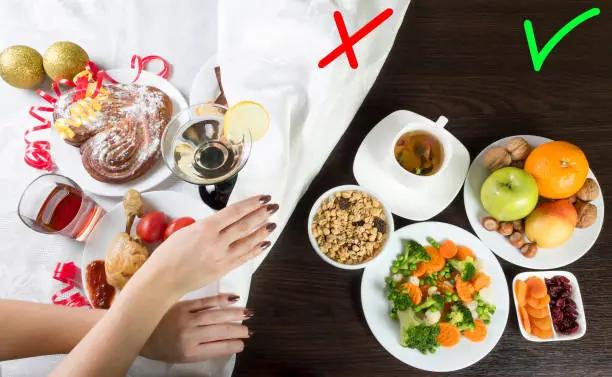
When sweetness is paired with protein, fat, or fiber, the eating experience often feels more complete.
nhãn sản phẩm không phụ gia - natural sugar hình minh họa sẵn có
For example:

👉 berries with Greek yogurt
👉 apple slices with nut butter
👉 oatmeal topped with fruit

Balanced combinations tend to reduce the urge to keep searching for something more.

Not through control — but through adequacy.

Moving Away From Extremes

One of the most helpful mindset shifts is releasing the idea that sugar must be viewed in absolute terms.

Nutrition rarely thrives in extremes.

Instead of asking:

"Is this sugar good or bad?"

Try asking:

👉 What else accompanies it?
👉 How fast is it being absorbed?
👉 Does this meal feel balanced?

These questions support better decisions without unnecessary rigidity.

The Bigger Perspective

Your body is remarkably adaptable.

It handles occasional sweetness with ease.

What shapes health most powerfully is the overall dietary pattern — the rhythm repeated across days and weeks.

So yes, natural sugar is still sugar.

But when surrounded by fiber-rich foods, thoughtful portions, and balanced meals…

…it tends to behave very differently than sugar delivered in isolation.

And often, understanding that difference replaces confusion with calm — the foundation of sustainable eating.

News in the same category

News Post