Health Food 17/02/2026 23:08

The Color of Your Plate Might Reveal More About Your Nutrition Than You Realize

If you looked down at your plate right now, what colors would you see?

Beige? Golden? Shades of brown?

Or a range of greens, reds, oranges, and purples?

While color might seem like a purely aesthetic detail, nutritional science suggests otherwise.

The diversity of colors in whole foods often reflects the diversity of beneficial compounds they contain.

And your body tends to benefit from that variety.

Why Color Matters Biologically

Plants produce natural pigments called phytochemicals — compounds that help protect them from environmental stressors like sunlight, pests, and disease.
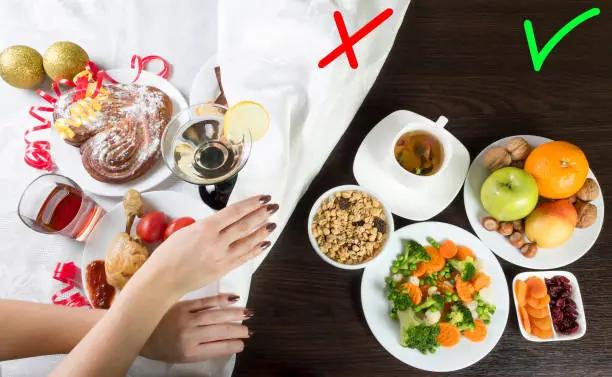
bảng đầy đủ thực phẩm cho gia đình xem hàng đầu - color of your plate hình ảnh sẵn có, bức ảnh & hình ảnh trả phí bản quyền một lần
Interestingly, many of these compounds also support human health in various ways.

Different colors often signal different phytochemicals.

Think of color as a quiet nutritional clue.

What Common Colors Typically Indicate
Green

Often associated with nutrients like folate and compounds that support cellular health.

Examples include spinach, broccoli, and kale.

Red

Frequently linked with antioxidants such as lycopene, studied for its role in supporting cardiovascular health.

Tomatoes and watermelon are well-known sources.

Orange and Yellow

These colors often reflect carotenoids, which the body can convert into vitamin A — important for vision and immune function.

Carrots and sweet potatoes are classic examples.

Purple and Blue

Typically rich in anthocyanins, researched for their relationship with brain health and aging.

Think blueberries, eggplant, purple cabbage.

No single color does everything.

But together, they create a broader nutritional landscape.

The “Beige Plate” Pattern
rau sống và trái cây tốt cho hệ vi sinh vật đường ruột - color of your plate hình ảnh sẵn có, bức ảnh & hình ảnh trả phí bản quyền một lần
Modern eating patterns sometimes drift toward foods that are convenient, shelf-stable, and comforting — many of which share similar muted tones.

This isn’t inherently problematic.

But when color variety consistently narrows, nutrient variety may narrow with it.

Often without us noticing.

A Practical Visual Check

You don’t need to memorize nutrient charts.

Instead, try a simple question before eating:

“Do I see at least two or three natural colors on this plate?”

Not artificial colors — but those that existed before processing.

It’s an easy mental shortcut that gently encourages diversity without rigid rules.

An Example Shift

Consider these two dinners:

Meal One:
fried chicken + fries

Meal Two:
grilled chicken + roasted carrots + sautéed greens

Both can fit into a balanced lifestyle.

But the second plate naturally introduces a wider range of compounds.

No extremes required — just thoughtful composition.

Variety Over Perfection

It’s important not to interpret this as pressure to build a perfectly colorful plate every time you eat.

Nutrition operates on patterns, not single meals.

Some days will be simpler than others.

What matters is the overall rhythm across weeks and months.

Adding color is often more effective — and more sustainable — than restricting foods.
salad trộn đĩa chụp từ trên cao trên bàn dã ngoại màu xanh lá cây nhạt - color of your plate hình ảnh sẵn có, bức ảnh & hình ảnh trả phí bản quyền một lần
A Gentle Strategy

Instead of asking what to remove from your meals, consider asking:

👉 “What color could I add?”

Maybe spinach in an omelet.
Berries with breakfast.
Roasted vegetables at dinner.

Small additions accumulate into meaningful nutritional range.

The Bigger Perspective

Color is one of the simplest nutritional guides available — no tracking apps, no calculations.

Just observation.

When your plate regularly reflects natural variety, it often signals that your body is receiving a broader spectrum of supportive nutrients.

Not because you followed a strict rule…

…but because you allowed diversity to show up, visually and nutritionally.

And sometimes, better health begins with something as simple as noticing what’s on your plate before the first bite.

News in the same category

News Post