Health Food 20/02/2026 21:54

Why Intermittent Fasting May Not Be More Effective Than Traditional Eating Patterns for Weight Loss

Intermittent fasting has become one of the most talked-about strategies in modern nutrition.

Time-restricted eating.
Alternate-day fasting.
Extended fasting windows.

The promise is appealing: eat less often, lose weight more efficiently.

But recent research has begun to challenge a common assumption:

intermittent fasting may not lead to greater weight loss than traditional calorie-controlled eating.

And the reasons are more nuanced than many expect.

Weight Loss Is About Energy — Not Just Timing

At its core, weight change depends on energy balance.

Fasting can reduce calorie intake — but only if it actually leads to eating less overall.

In many studies, when total calories are matched, weight loss outcomes between intermittent fasting and continuous eating are remarkably similar.
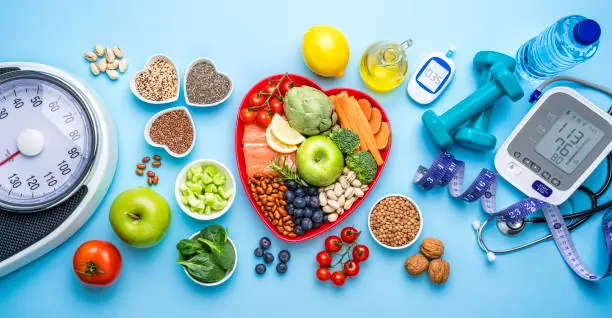
chế độ ăn kiêng nhịn ăn gián đoạn - intermittent fasting  hình ảnh sẵn có, bức ảnh & hình ảnh trả phí bản quyền một lần
The body seems to care more about how much energy arrives over time than how tightly eating windows are defined.

Why Fasting Feels More Powerful Than It Often Is

Intermittent fasting works well for some people because it simplifies decisions.

Fewer meals mean fewer opportunities to eat.

That structure can be helpful — but it’s a behavioral advantage, not a metabolic shortcut.

When structure fades or eating becomes compressed into shorter windows, some people naturally compensate by eating larger portions.

Not consciously.

Biologically.

Hunger and Compensation Matter

Extended fasting periods often increase hunger hormones.

When eating resumes, appetite can be stronger — especially for energy-dense foods.

This compensation is not a failure of willpower.

It is the body responding to perceived energy scarcity.

For some individuals, this leads to:

overeating during eating windows

reduced satiety

increased mental focus on food

In these cases, fasting may feel effortful rather than freeing.

Adherence Beats Strategy

One of the strongest predictors of success in nutrition is adherence.

If a pattern fits your life, you’re more likely to sustain it.
nhịn ăn gián đoạn - giảm cân - intermittent fasting  hình ảnh sẵn có, bức ảnh & hình ảnh trả phí bản quyền một lần
If it feels rigid, socially limiting, or stressful, long-term consistency drops — regardless of theoretical benefits.

Research increasingly suggests that people lose similar amounts of weight when they follow any approach they can maintain.

Not the one that sounds most impressive.

Metabolic Benefits Are Often Overstated

Some claims suggest intermittent fasting “boosts metabolism.”

Current evidence does not strongly support this in humans under typical conditions.

Any metabolic advantages appear modest and inconsistent — especially when compared to continuous, balanced eating.

This doesn’t mean fasting has no value.

It means its benefits are often context-dependent, not universal.

When Fasting Can Make Sense

Intermittent fasting may work well for people who:

prefer fewer meals

struggle with constant snacking

enjoy structured routines

It may be less helpful for those who:

experience strong hunger swings

have high training demands

feel preoccupied with food

Neither response is right or wrong.

They are individual.
bữa sáng keto đơn giản trên đĩa - intermittent fasting  hình ảnh sẵn có, bức ảnh & hình ảnh trả phí bản quyền một lần
Reframing the Question

Instead of asking:

“Is intermittent fasting better?”

A more useful question may be:

“Which eating pattern helps me feel steady, nourished, and consistent?”

Consistency quietly outperforms intensity.

The Bigger Perspective

Weight loss does not require extreme timing strategies.

It requires patterns that reduce friction between biology and behavior.

For some, fasting creates that alignment.

For others, regular meals do.

Understanding this removes the pressure to chase trends — and replaces it with something far more sustainable:

choosing the structure that actually works for you.

Because in the long run, the best eating pattern isn’t the most popular one.

It’s the one you can live with — calmly and consistently.

News in the same category

News Post