Walnuts are nutrient-dense, meaning they pack a lot of nutrition into a small serving. Their health effects come from a unique combination of beneficial compounds:
-
Alpha-linolenic acid (ALA): A plant-based omega-3 fatty acid that supports cardiovascular and brain health.
-
Healthy fats: Mostly polyunsaturated and some monounsaturated fats, which help lower LDL (“bad”) cholesterol.
-
Protein and fiber: Contribute to fullness, steady blood sugar, and improved digestion.
-
Melatonin, magnesium, and tryptophan: Compounds that may help the body regulate sleep and relaxation.
-
Antioxidants (polyphenols): Help reduce inflammation and oxidative stress, protecting cells from damage.
-
Vitamins & minerals: Including B vitamins (especially folate), vitamin E, copper, manganese, and phosphorus — all vital for metabolism and energy production.

In addition, walnuts are one of the few nuts rich in omega-3 fats, which makes them stand out among other common nuts like almonds or cashews.
Evidence-Based Health Benefits
1. Heart Health
Research consistently shows that eating walnuts can help lower LDL cholesterol, reduce blood pressure slightly, and improve blood vessel flexibility. These effects together lower the risk of cardiovascular disease over time.
2. Brain Function and Aging
The combination of omega-3 fats, antioxidants, and polyphenols in walnuts may enhance cognitive performance and help protect the brain from age-related decline. Some studies link regular walnut intake to improved memory and faster processing speed in older adults.
3. Reduced Inflammation
Chronic inflammation is linked to many diseases, including diabetes and heart disease. The antioxidants and healthy fats in walnuts may help reduce inflammatory markers in the blood.
4. Satiety and Weight Control
Though high in calories, walnuts promote a feeling of fullness and may prevent overeating later in the day. When eaten in moderation and balanced with total calorie intake, they can support long-term weight management.
5. Better Sleep
Thanks to natural melatonin, magnesium, and tryptophan, walnuts may modestly improve sleep quality and help people fall asleep more easily.
Potential Downsides and Cautions

High Calorie Density:
One ounce (about 28 g or 12–14 halves) provides roughly 180–200 calories. Regular overeating can lead to weight gain despite the healthy fats.
Allergy Risk:
Walnuts are a common tree-nut allergen, and reactions can be severe, even life-threatening (anaphylaxis). Anyone with a nut allergy should avoid them completely and read food labels carefully.
Digestive Sensitivity:
Large servings may cause bloating, gas, or loose stools, especially in people not used to high-fiber foods.
Medication Interactions:
Walnut omega-3s have mild blood-thinning effects. If you take anticoagulant or antiplatelet drugs (like warfarin or clopidogrel), consult your doctor before increasing walnut intake — moderate amounts are usually safe.
Phytic Acid:
Like other nuts, walnuts contain phytic acid, which can slightly reduce mineral absorption. This is only a concern at very high intakes.
Storage and Rancidity:
Because of their high polyunsaturated fat content, walnuts spoil faster than other nuts. Rancid walnuts taste bitter and can form unhealthy oxidation products. To keep them fresh, store in an airtight container in the refrigerator or freezer.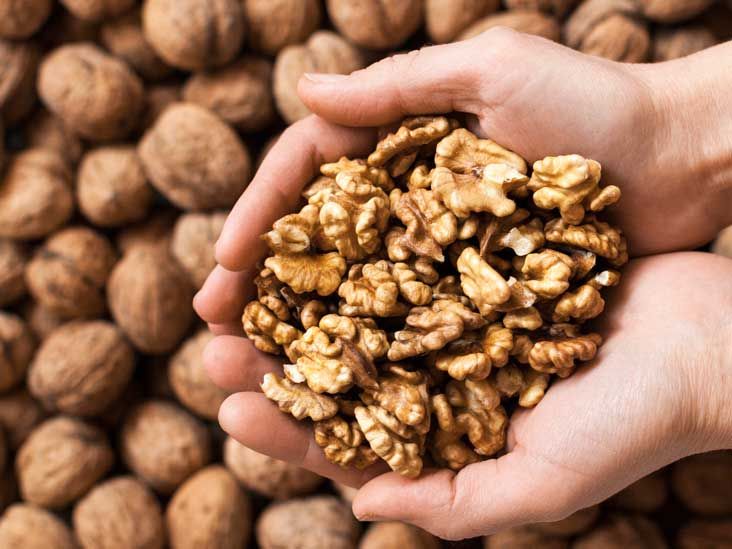
Walnuts for Children
Children can safely enjoy walnuts with a few precautions:
-
Choking hazard: Whole nuts are unsafe for toddlers and children under about age 4. Offer ground walnuts, walnut butter, or finely chopped pieces instead.
-
Supervised eating: After age 4–5, most children can manage small whole nuts safely under supervision.
-
Nutritional benefits: The healthy fats in walnuts support brain growth and development. Serve in small, age-appropriate portions if there’s no allergy risk.
Walnuts During Pregnancy
For most women, walnuts are safe and beneficial during pregnancy. They provide ALA (a plant omega-3), protein, fiber, folate, and magnesium, which support fetal development and maternal health.
Some research even suggests that eating nuts during pregnancy does not increase the baby’s allergy risk — and may actually help protect against it.
Tips:
-
Enjoy moderate servings (around 1 ounce per day).
-
Avoid sugary, candied, or heavily salted varieties.
-
If you or your family have a history of severe nut allergies, discuss walnut consumption with your obstetrician.
Eating Walnuts Before Bed — Good or Bad?
Possible Benefits:
A small portion of walnuts before bedtime may help those who struggle with sleep. Their melatonin, magnesium, and tryptophan content can help relax the body and signal it’s time to rest. A handful can also prevent nighttime hunger that disrupts sleep.
Potential Drawbacks:
Because they’re high in fat and calories, eating a large amount right before bed might cause indigestion or excess calorie intake, especially if you’re inactive afterward.
Best Practice:
If you’d like to use walnuts for better sleep, have a small serving (about 1 ounce or ¼ cup) about 1–2 hours before bed, rather than a big handful immediately before lying down.
How to Eat Walnuts Wisely
✅ Ideal Portion: About 1 ounce (28 g) per day — roughly 12–14 halves.
✅ Choose quality: Go for plain, unsalted, unroasted, or dry-roasted varieties without added sugar or coatings.
✅ Store properly: Keep in the fridge or freezer to extend freshness.
✅ For kids: Use ground walnuts or nut butter to prevent choking.
✅ Medication caution: Tell your doctor if you’re on blood thinners.
✅ Allergy awareness: Avoid completely if allergic, and check for cross-contamination on food labels.
Bottom Line
Walnuts are among the healthiest nuts you can eat. They support heart and brain health, help reduce inflammation, and may even improve sleep quality.
Still, they’re calorie-dense and can trigger severe allergic reactions in sensitive individuals. With proper portion control and storage, walnuts can be a daily part of a balanced, heart-healthy diet for adults, children, and pregnant women alike.
A small handful a day — or a modest serving before bed — is often enough to enjoy their many benefits without the downsides.